
How Ontario People Searches Work
Ontario records follow the office that created them. City departments keep council, permit, code, police, and local business files. San Bernardino County holds deeds, assessor data, county vital certificates, court cases, voter administration, and jail records. California agencies add professional licenses, business entities, statewide vital copies, prison custody, and unclaimed property. Choosing among them is easier when the starting fact is clear.
A full name can lead to recorder parties, court cases, business filings, or a license. An Ontario street address works better in the assessor map and city permit system. A former classmate belongs in yearbooks and newspaper indexes. Family history may require vital indexes, probate cases, and local archives. A phone number has fewer official paths, so confirm any name it yields against an official record before relying on it.
- Write down the known name, address, date range, and likely Ontario connection.
- Use the county assessor for an address or the recorder index for a party name.
- Check the court party search and business or license records for a second match.
- Move to local history collections when the person or address predates online coverage.
- Ask the responsible clerk for a copy or record that is not published online.
| Search source | Strongest use | Main limit |
|---|---|---|
| Official Ontario or county records | Current custodian data, case references, parcels, and copies | Records are split among offices and some fields are restricted |
| Library and archive collections | Former residents, classmates, old addresses, and family history | Coverage varies by year and some work requires staff help |
| Commercial people-finder category | A broad lead when little is known | Source age, accuracy, and identity matching may be unclear |
Names alone can collide. Compare middle names, document dates, parcel locations, relatives, or business ties before concluding that two entries concern the same person.
Ontario Records Offices and Search Paths
The most useful Ontario search offices sit at two levels. The city clerk handles Ontario proceedings and local requests. The county Assessor-Recorder-County Clerk, known as ARC, maintains recorded instruments, assessor information, marriage services, fictitious business names, and county certificates. Court files belong to the Superior Court, not ARC. That division matters because sending a probate request to the county clerk or an Ontario permit question to the recorder will slow the search.
San Bernardino County Recorder-Clerk
222 W. Hospitality Lane, 1st Floor
San Bernardino, CA 92415
909-387-8306
San Bernardino Superior Court
County trial court
Civil, criminal, probate, family, traffic
Clerk by case location
The Hall of Records counter is open from 8 a.m. to 5 p.m. The Ontario clerk lists Monday through Thursday hours of 7:30 a.m. to 5:30 p.m. and Friday hours of 8 a.m. to 5 p.m. Detailed access rules and copy procedures belong with the Ontario public records system.
Search Ontario Recorder Names Carefully
The county recorder index is a catalog of recorded documents, not a set of deed images. It supports grantor and grantee research from 1958 to the present. A grantor transfers an interest; a grantee receives it. Results can point to deeds, liens, releases, powers of attorney, maps, or fictitious business filings. The county advises trying every reasonable spelling because initials, compound surnames, old names, and omitted accent marks can change a result.
| Recorder field | How it narrows an Ontario search | What to retain |
|---|---|---|
| Grantor or grantee | Finds a person or entity indexed as a document party | Exact indexed spelling |
| Document number | Targets one recorded instrument | Number for the copy order |
| Book and page | Locates an older reference | Both parts of the citation |
| Document title | Separates deeds, liens, releases, maps, and other filings | Title and recording date |
| Date range | Limits common-name results | Dates around the known event |
The Recorder-Clerk Public Access System begins with a disclaimer and search entry.
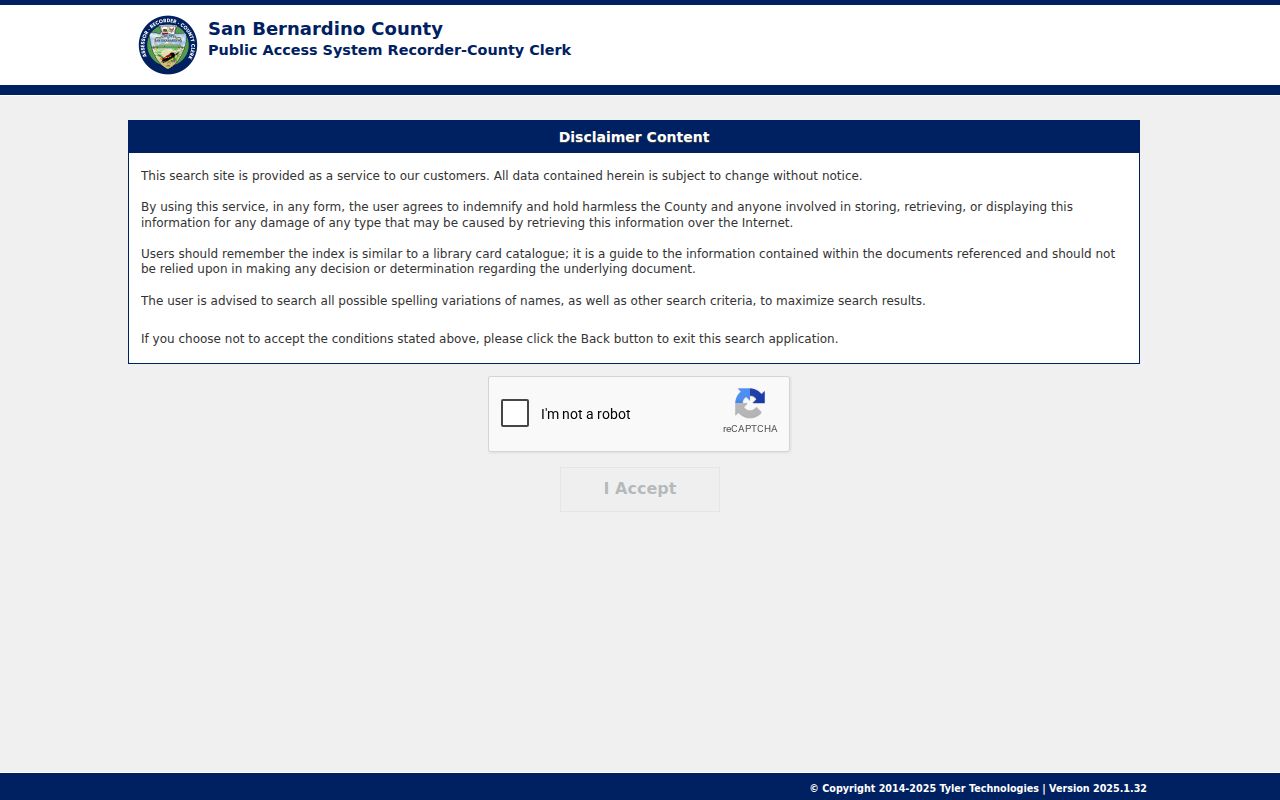
The screen leads to index data. Actual images are not available through the public web index, so note the document number or book and page, then use the counter or ARC copy process.
- Index
- A catalog that points to a record but is not the underlying document.
- Document number
- The recorder's unique identifier for an instrument.
- Certified copy
- A copy authenticated by the records custodian for an added fee.
- APN
- The assessor parcel number that connects map, tax, and property records.
Find Ontario Owners Through Parcels
Address research starts with the assessor rather than the recorder. ARC states that the recorder does not provide property ownership by address. Assessor Parcel Access and the county map viewer can identify a parcel by street address or APN. The roll may show an owner name and tax mailing address unless an entry is protected under California law. That mailing address can differ from the situs address, which is the parcel's physical location.
Use the assessor and recorder as a chain: address to APN, APN to current roll facts, owner name to recorded instruments, and document number to a copy. GIS adds boundaries and map context, but it does not prove title. The county publishes historical assessment valuations from 1978 forward, while current annual and monthly roll files provide another route when the interactive portal is limited.
The govPIMS assessor property search is the county's public property information entry.
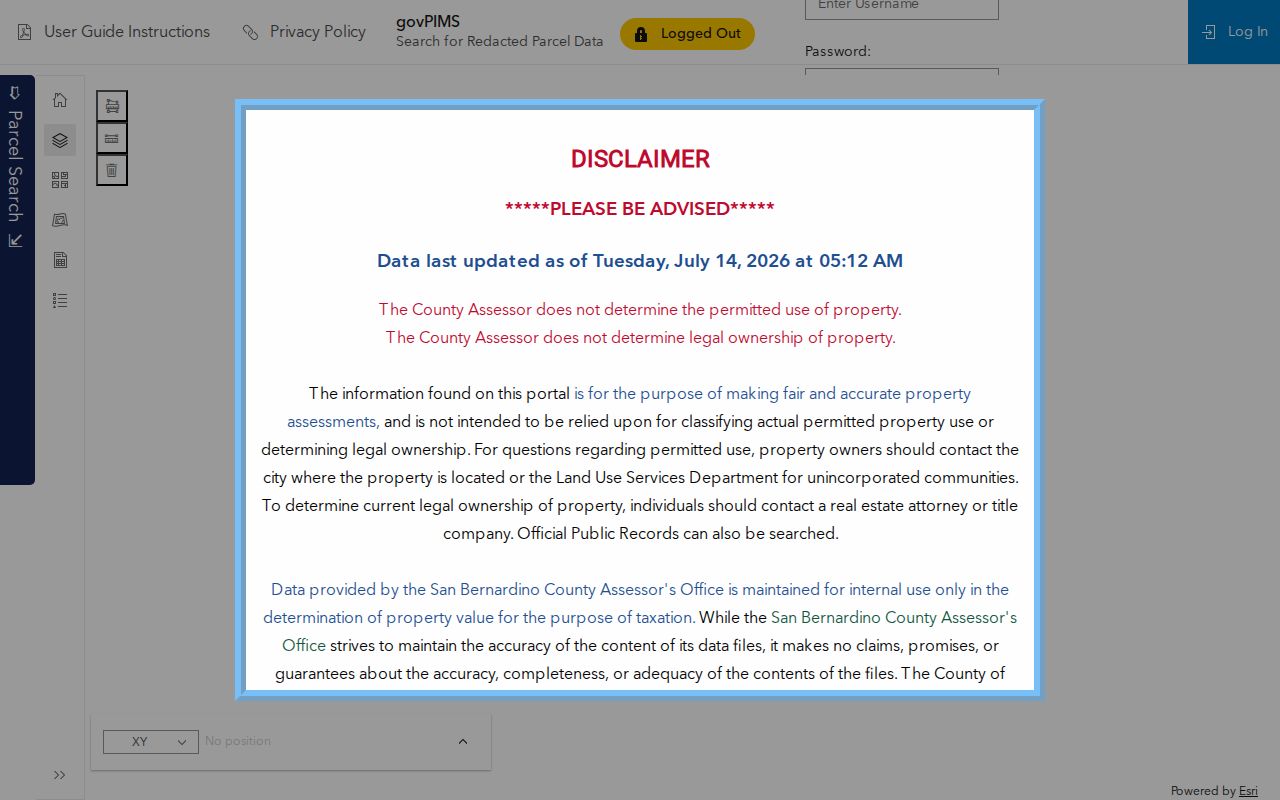
The parcel screen helps connect a known Ontario address to an APN and public assessment facts. A blank owner or mailing field can reflect a lawful protection, not a failed search.
Search Ontario Court Names and Cases
The Superior Court of California, County of San Bernardino handles Ontario civil, criminal, probate, family, small claims, and traffic matters. Its Court Access Portal accepts a case number. A party-name search requires a login and offers standard name or AKA mode with first, middle, last, and business fields. Probate can be especially useful for lawful family and estate research because a case may identify a decedent, personal representative, heirs, hearing dates, and filed documents.
A searchable case does not make every document public online. The court sells remote civil document views at $0.50 per page when remote access is legally allowed. Sealed cases, juvenile files, confidential family material, and other restricted documents remain unavailable. If the portal yields only a case number, contact the clerk for that case location and ask about a public terminal, copies, or certification.
| Ontario court trail | Search method | Access limit |
|---|---|---|
| Superior Court case | Case number or logged-in party search | Only public case data and eligible documents |
| Probate matter | Party, decedent, or case number | Some filings require clerk access |
| Federal case | PACER name or case search | Account and federal fees may apply |
Note: Court indexes identify proceedings, not character, guilt, or current status, so read the disposition and underlying public file before drawing conclusions.
Ontario Vital Records and Family Links
For an Ontario birth or death, San Bernardino County ARC and Public Health can issue county certificates, while California Department of Public Health handles statewide requests. ARC also handles certificates for marriage licenses bought in San Bernardino County. Divorce case files stay with Superior Court; the state offers only a certificate of record for a dissolution. County scope matters, so an event outside San Bernardino County belongs with that county or the state office.
California does not open all certificates after one broad waiting period. Health and Safety Code section 103526 distinguishes authorized certified copies from informational copies. Authorized requesters include specified relatives, the registrant, a legal representative, or a person acting under a court order or statute. Mail requests for an authorized copy require a notarized sworn statement. Confidential marriage certificates go only to the spouses or someone with a court order.
The county vital records desk explains local scope, eligibility, and ordering. Requesters may use the ARC counter, a county mail application, Public Health, or the statewide CDPH route.
Older indexes can still support genealogy without serving as certified proof. The local library, California State Archives, and FamilySearch county marriage collection provide historical leads, while the underlying certificate rules still control copies.
Reconnect Through Ontario Model Colony
Ontario's best source for a resident who has slipped out of modern databases is the Robert E. Ellingwood Model Colony History Room. Its holdings include a Master Biography File, city directories, building surveys, an online newspaper index, photographs, maps, and yearbooks from Chaffey, Ontario, and Colony high schools. Those collections support family history, old-house research, and reunions with former classmates without forcing every question into a county database.
Ontario's Model Colony story also explains why local material can be richer than a generic name index. Records of early families, clubs, water development, schools, local firms, and Euclid Avenue may live in photographs, programs, newspapers, or donated family collections. Ontario Treasures and California Revealed add digitized photos, moving images, and audio from the mid-1890s onward.
The Model Colony History Room lists these local sources and contact options. Phone or email staff when exact directory and yearbook years are not stated online.
Regional gaps can be checked at the Arda Haenszel California Room in San Bernardino, whose stated holdings include city directories from 1887 through 1968, criss-cross directories from 1976 forward, phone books from 1918 forward, and newspapers from 1894 forward.
Trace Ontario Names Through Licenses
Business and professional records work well when a person's trade, firm, or occupation is known. California's business search covers corporations, limited liability companies, and limited partnerships. County fictitious business name filings cover many local trade names and sole proprietors. Ontario business-license staff can verify city licensing by phone or through a records request because no official public Ontario license search was confirmed in the research.
The Department of Consumer Affairs advanced form accepts first name, last name, license number, business name, profession, city, county, and status. Results can show whether a credential is current, expired, suspended, or revoked. The State Bar separately supports attorney name and bar-number searches. Try plain spellings when a system drops diacritics or extended characters.
The California advanced license search exposes those person and business fields. Use the issuing board's status and public discipline details to confirm a match.
Ontario Custody and Safety Lookups
The San Bernardino County Sheriff Inmate Locator is the local custody source. Its JIMS search accepts a booking number or a combination of name, date of birth, age, and gender. It also provides projected release lists by date. California's Department of Corrections and Rehabilitation has a separate locator for state prison custody, so a zero county result does not rule out state custody or a release.
The county inmate locator entry gives the official search route and visiting information.
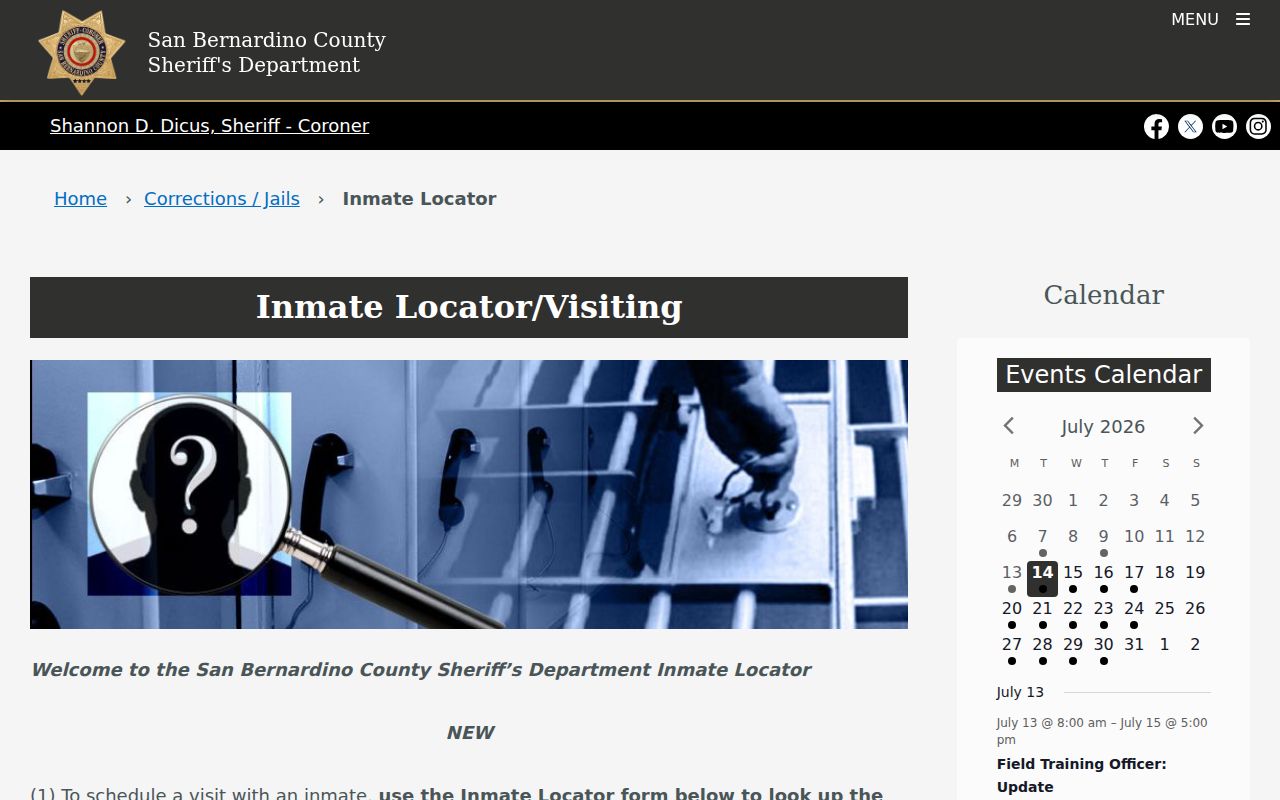
The official screen separates current booking information from other record types. Confirm identity with age or birth data and treat projected release dates as subject to change.
California's Megan's Law registry is another narrow official source. It displays only registrants made public by statute and carries strict use rules. The state registry search explains those limits.
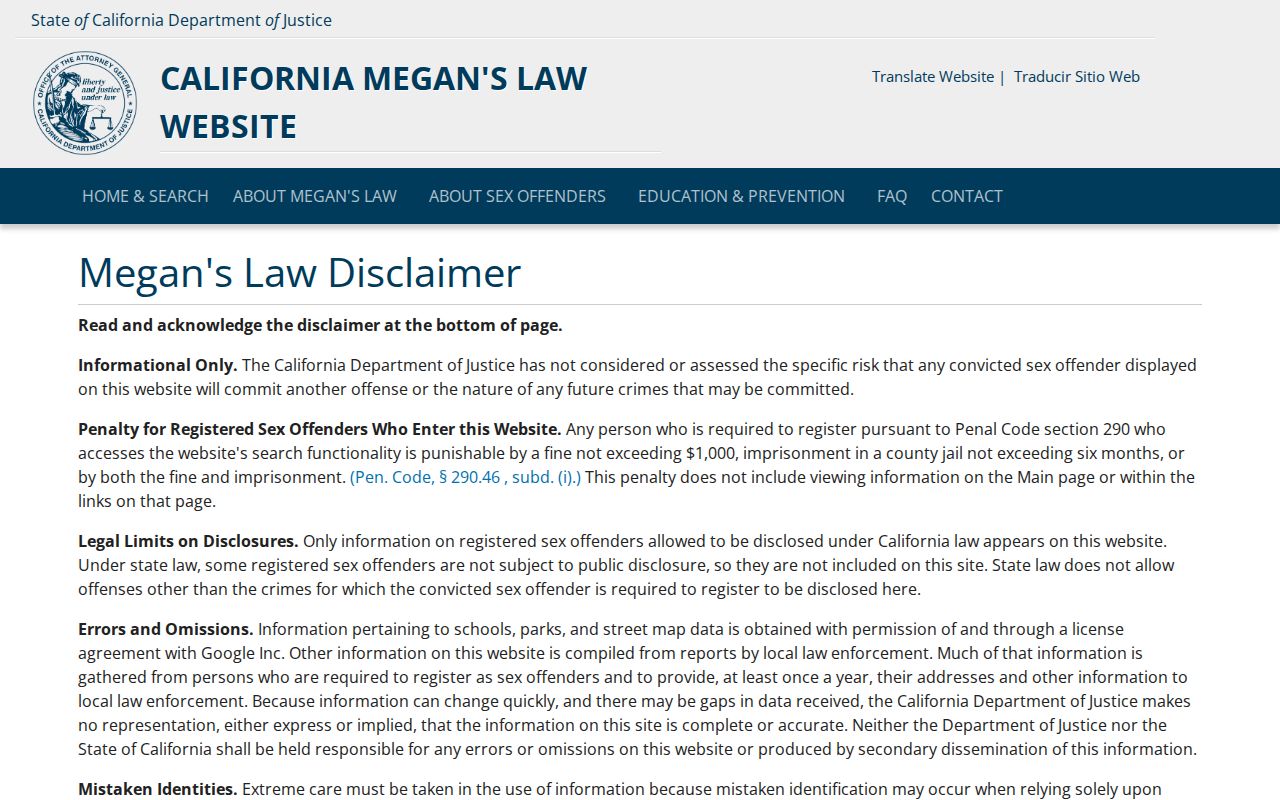
Absence from the public site is not proof that no record exists. Never use registry information to threaten, harass, or commit a crime.
Find Ontario Heirs in Unclaimed Property
California unclaimed property can connect a name with an older address or business. It covers dormant financial property reported to the State Controller, not real estate and not a current residence list. A result can still help an heir, estate representative, or relative confirm that a person had a past Ontario connection. Search name variations and compare the listed city or address with known family facts before beginning a claim.
The State Controller's unclaimed property search is free to use.
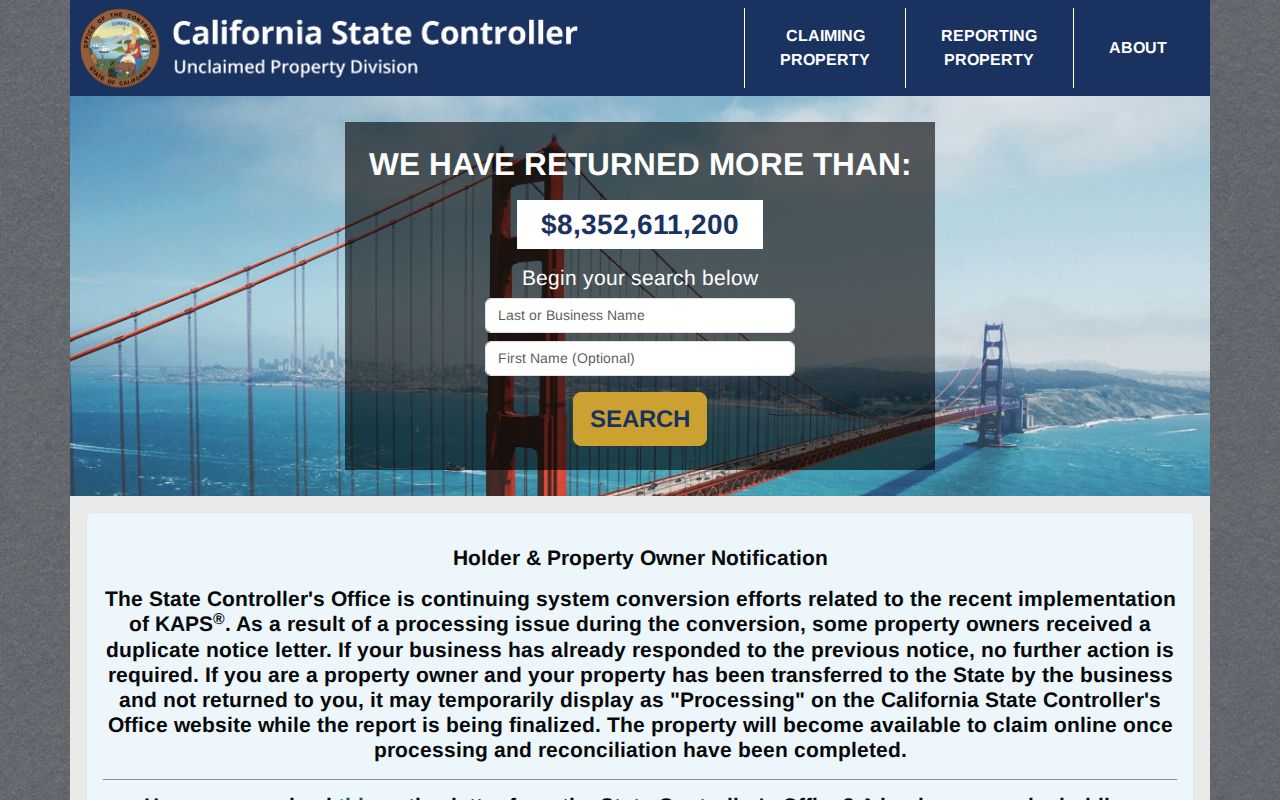
The result is a lead, not proof of identity or entitlement. The state claim process requires separate evidence from anyone seeking the property.
Ontario Voter Lookup Boundaries
California voter registration is not a public name directory. A voter can review personal status through California My Voter Status or San Bernardino County My Elections Gateway. Those tools provide personalized election information rather than an open search for other Ontario residents. Bulk or specific voter records require an application and a legally approved election, scholarly, journalistic, political, or governmental use.
The California My Voter Status form is the official self-lookup.
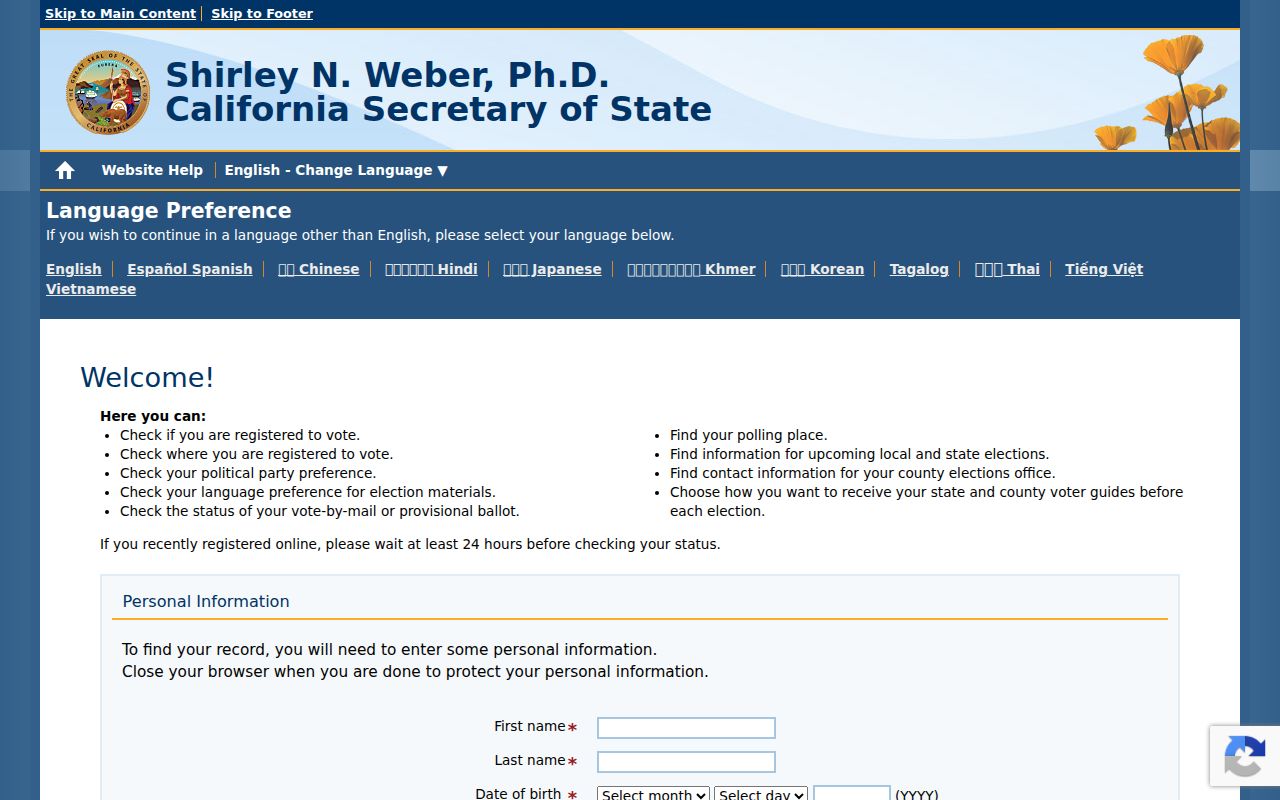
The form should be used for the requester's own record. Voter files cannot be used for harassment, marketing, or an unapproved purpose, and protected voter information remains confidential.
Aggregate information is different. San Bernardino County launched a dashboard in February 2026 that reports registration totals, new registrations, address updates, inactive voters, and cancellations with party and district filters. It shows trends without opening individual voter files. The full rules and request path are covered on the Ontario voter records page.
Browse Ontario City Contact Records
The City of Ontario contact directory lists departments and facilities rather than every employee. It is a useful first stop for identifying the office behind a local permit, business license, code case, council record, or police-record request. Board and commission rosters, meeting records, resolutions, FPPC filings, and municipal election material may identify public officials or participants in city business.
The Ontario city contact page provides the current departmental route.
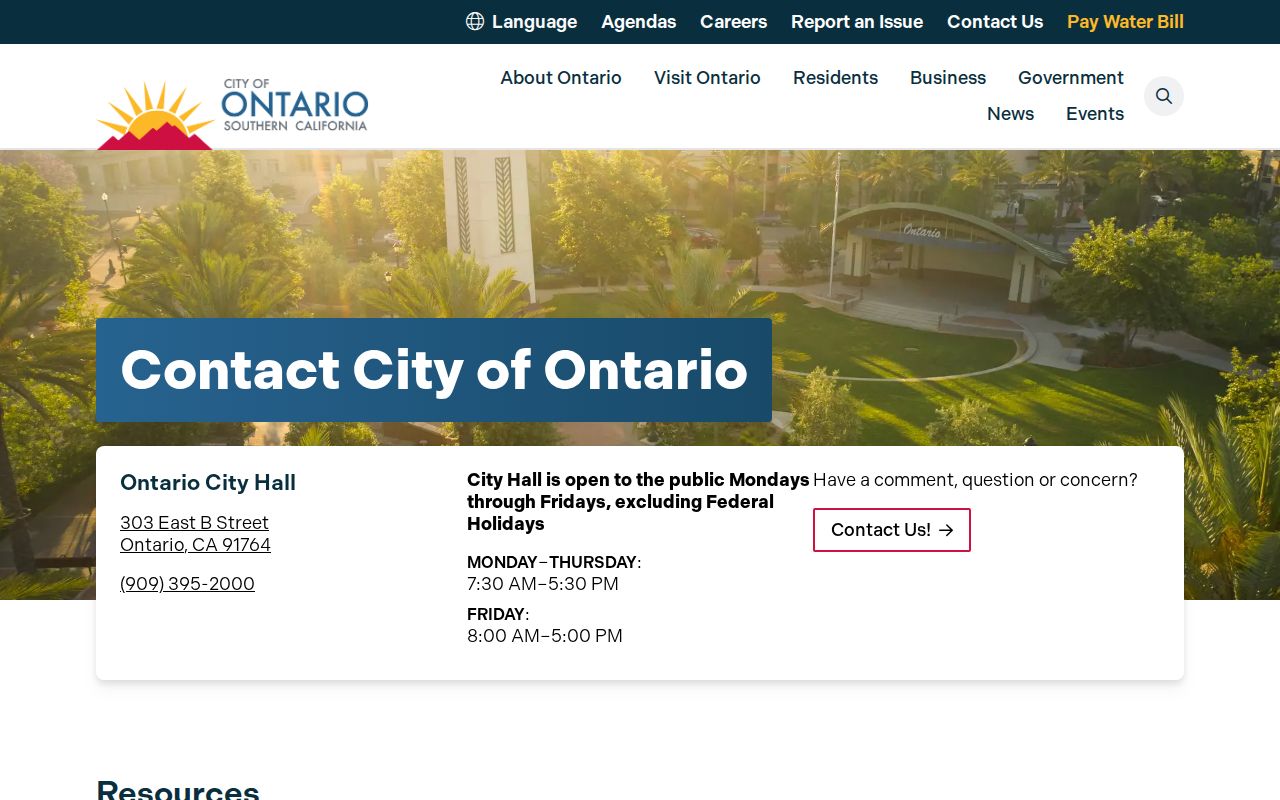
Use the department listing to reach the actual custodian. If a releasable city record is not posted, contact City Clerk and Records Management under the California Public Records Act.
Spot Ontario Records-Based Scams
Official records can be copied into deceptive mail. San Bernardino County warned in April 2025 that misleading lien-payment letters may cite real recorded information and appear official while pressing a recipient to pay a private solicitor. A September 2025 county alert likewise told property owners to use official tax-payment channels. The presence of a correct parcel number or lien reference does not prove that a demand came from the county.
Check the sender's exact office name and domain, compare any copy charge with the ARC fee schedule, and call an official number rather than the number printed on a suspicious letter. Keep the envelope and payment instructions when reporting fraud. Gift card, wire, or cryptocurrency demands are strong warning signs.
The county lien-letter warning shows how genuine public data can be used as bait.
Note: Verify a record with its custodian and verify a payment demand separately, even when the letter quotes accurate Ontario property information.
Bridge Ontario Search Gaps Before 1958
The recorder's modern grantor and grantee index begins in 1958. San Bernardino County Historical Archives handles significant records from before that line. Its building is currently listed as closed, despite posted counter-hour information, so researchers should use the archives email or Arrowhead portal before planning a visit. Arrowhead supports keyword searches, an asterisk for truncated terms, and browsing by collections, creators, or subjects.
The county Historical Archives page explains the pre-1958 focus and current contact route. California State Archives and local history rooms extend the trail through deeds, probate files, naturalization, Great Registers, old vital indexes, directories, newspapers, and photographs.
Ontario incorporated in 1891, while San Bernardino County dates to 1853. City proceedings therefore begin later than the surrounding county record trail. For an early Model Colony family, combine county land or court material with Ontario library sources. For a former address, move from an old city or criss-cross directory to newspapers, the recorder or archives, and then probate or vital records.
- Before 1891: county and state archives hold the strongest land, court, probate, naturalization, and Great Register trails.
- From 1891 through 1957: combine Model Colony collections with county archives for city records, directories, deeds, newspapers, and yearbooks.
- From 1958 forward: join the recorder index with assessor and court portals for recorded parties, parcels, cases, and copy references.
Digital access is fastest, but it is not the whole record. Ontario people searches often become accurate only after an index entry is checked against a copy, a clerk's file, or a local archive.